
Thinking about picking up a scratch card, but not sure if it’s worth spending a bit more? Wondering if paying extra means better chances of winning, or if those cheaper cards are just as likely to pay out?
You’re not alone—many people ask how the price of a scratch card affects the chances of a prize. This article breaks down how win rates are calculated, what really differs between higher-priced and budget cards, and how to use published information to make a clear choice.
How Are Scratch Card Win Rates Calculated?
Win rates are based on the total number of printed tickets for a game and how many of those tickets contain prizes. The figure is a simple percentage: winners divided by total tickets. For example, if 1,000,000 cards are printed and 100,000 contain a prize, the win rate is 10%. That number is for the whole batch, not a promise for any single ticket.
These calculations are fixed when a game is created, before cards are distributed. The published odds show the chance of winning any prize and typically include separate figures for higher-value prizes. This transparency means players can check the figures for a specific game before deciding to buy. The next section explains how price usually ties into those published prize structures.
What Distinguishes Expensive Scratch Cards from Cheaper Ones?
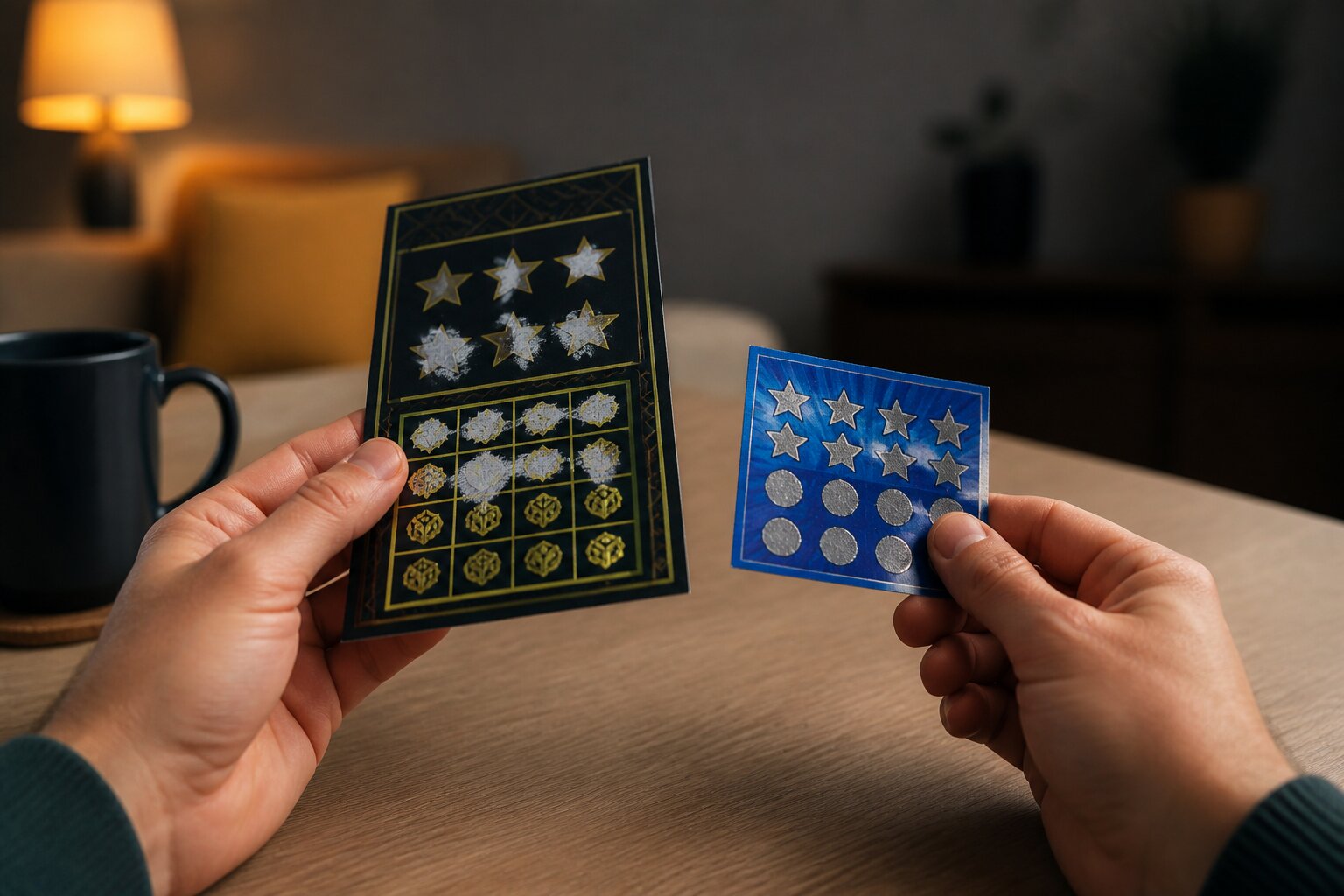
The most obvious difference is price: higher-priced cards often cost £5 or £10, while cheaper ones are usually £1 or £2. Beyond that, pricier cards commonly offer larger top prizes and additional play features such as more play areas or bonus sections. These features increase the potential value on a single card.
Cheaper cards tend to be simpler and quicker to play, with smaller maximum prizes and fewer ways to win larger amounts. Both types are printed in batches with published odds and prize breakdowns, so the information needed to compare them is available. If you want to weigh the possible returns against what you enjoy about the game, the following section looks at how odds typically vary between price points.
Actual Odds: Expensive vs Cheaper Scratch Cards
Every game has its own odds, and regulators require those odds to be available. Expensive cards sometimes show slightly better overall odds of winning any prize, but the difference is often smaller than many expect. For instance, a higher-priced card might show a 1 in 3 or 1 in 4 chance of winning any prize, whereas a low-cost card might be around 1 in 4 or 1 in 5.
What changes more noticeably between price points is how prizes are distributed. Higher-priced games tend to have a greater share of larger prizes, while cheaper games usually feature smaller payouts more frequently. It is important to remember that published odds describe the entire batch and do not guarantee individual outcomes.
Common misconceptions include the idea that buying more cards or selecting only expensive ones improves the chance of winning. Each ticket is independent and its probability is already fixed when the batch is made. With that in mind, the next section explores how prize sizes and distribution affect those win rates.
Prize Amounts and Their Impact on Win Rates
A game’s prize structure sets not only how many prizes exist but also their sizes. Higher-priced cards generally include higher top prizes, sometimes reaching tens or hundreds of thousands of pounds, while cheaper tickets typically cap out at lower sums. To balance larger top prizes, game designers may include fewer of those prizes in the batch, so the likelihood of hitting a jackpot is lower even on an expensive card.
Smaller prizes are more common and help create a steadier pattern of payouts across the print run. That means a cheaper card might return small amounts more often, while an expensive card might offer rarer but much larger wins. The overall win rate for the game accounts for every prize tier across the entire batch, so total frequency and prize value both feed into that figure. With prize structure in mind, the next section guides you on where to check the official odds before you buy.
Where to Find the Best Odds on Scratch Cards
The most reliable sources for ticket odds are the information printed on the card and the game provider’s official site, where up-to-date prize breakdowns and the overall win rate are published. Independent review platforms can also collate and compare these figures, but it is important to check the original published data for accuracy.
Look for clear, current information on the number of prizes per tier and the overall odds of winning any prize. That lets you compare how often small wins appear versus the chances of a large payout. Knowing where to find and how to read that data helps you make a more informed choice, and the next section examines whether spending more changes your returns in practice.
Does Spending More Guarantee Better Returns?
Spending more on a single ticket or buying more tickets does not guarantee a better return. Every card’s prizes and odds are predetermined and each ticket is an independent entry in the printed batch. While pricier tickets can offer higher maximum prizes, that is an opportunity rather than an assurance of return.
The expected return from a game is a mathematical average based on the published prize values and their frequencies. Paying more increases the scale of possible wins but does not change the underlying probabilities set for the game. With that clarity, it helps to contrast the typical experience of small regular wins with chasing the rare big jackpots, which is covered next.
Understanding Small Wins Versus Big Jackpots
Smaller payouts appear much more often than top prizes. These modest prizes — amounts such as a few pounds or tens of pounds — are designed to occur throughout the print run and create higher-frequency outcomes for players. Top prizes are intentionally scarce, which is why they are heavily promoted yet remain rare.
Both types of prize are included in the published prize table for each game. The balance between frequent small wins and very rare large wins determines the character of a ticket: some games provide steady small payouts, while others focus on the occasional large prize. Knowing this helps set realistic expectations about what an individual ticket is likely to deliver. The next section considers how to judge value for money between pricier and budget cards.
Comparing Value for Money: Expensive or Cheap Scratch Cards?
Value depends on what someone wants from the ticket. Expensive cards often deliver more features, longer play and higher potential top prizes, which may be appealing to players who enjoy that format. Cheaper cards offer a low-cost way to play with quicker outcomes and generally smaller prizes.
Evaluating value involves looking at the published odds, prize distribution and how that matches an individual’s budget and priorities. Monetary return is never guaranteed, so choosing a card that fits an affordable budget and provides the kind of experience someone enjoys is the most practical approach. The following section outlines sensible budget considerations and where to find help if play ever feels out of control.
Responsible Play and Budget Considerations
Keeping play within an affordable budget is important for maintaining a positive experience. Setting a monetary limit beforehand helps prevent overspending and keeps the activity within leisure spending rather than necessary expenses. It is also wise to be aware of time spent on play and to avoid increasing stakes to recover previous losses.
Support and guidance are available for anyone who feels their play is becoming a problem, including professional services that offer confidential help. Remember that tickets are a form of entertainment with outcomes determined by predetermined probabilities, so planning and limits are the practical safeguards. With these considerations in place, the final section summarises the essential points to take away.
Summary: Key Points to Remember When Choosing a Scratch Card
Scratch cards have set prize structures and published win rates that apply across entire print batches, so individual tickets carry the same predefined probabilities. Higher-priced cards usually offer larger top prizes and extra features, while cheaper options often provide smaller, more frequent payouts.
Consult the official odds and prize breakdowns before choosing a game, and select tickets that fit an affordable personal budget. No amount of spending changes the published probabilities, and there is no reliable method to secure a win. Treat scratch cards as entertainment, be mindful of limits, and seek support if needed.
**The information provided in this blog is intended for educational purposes and should not be construed as betting advice or a guarantee of success. Always gamble responsibly.