
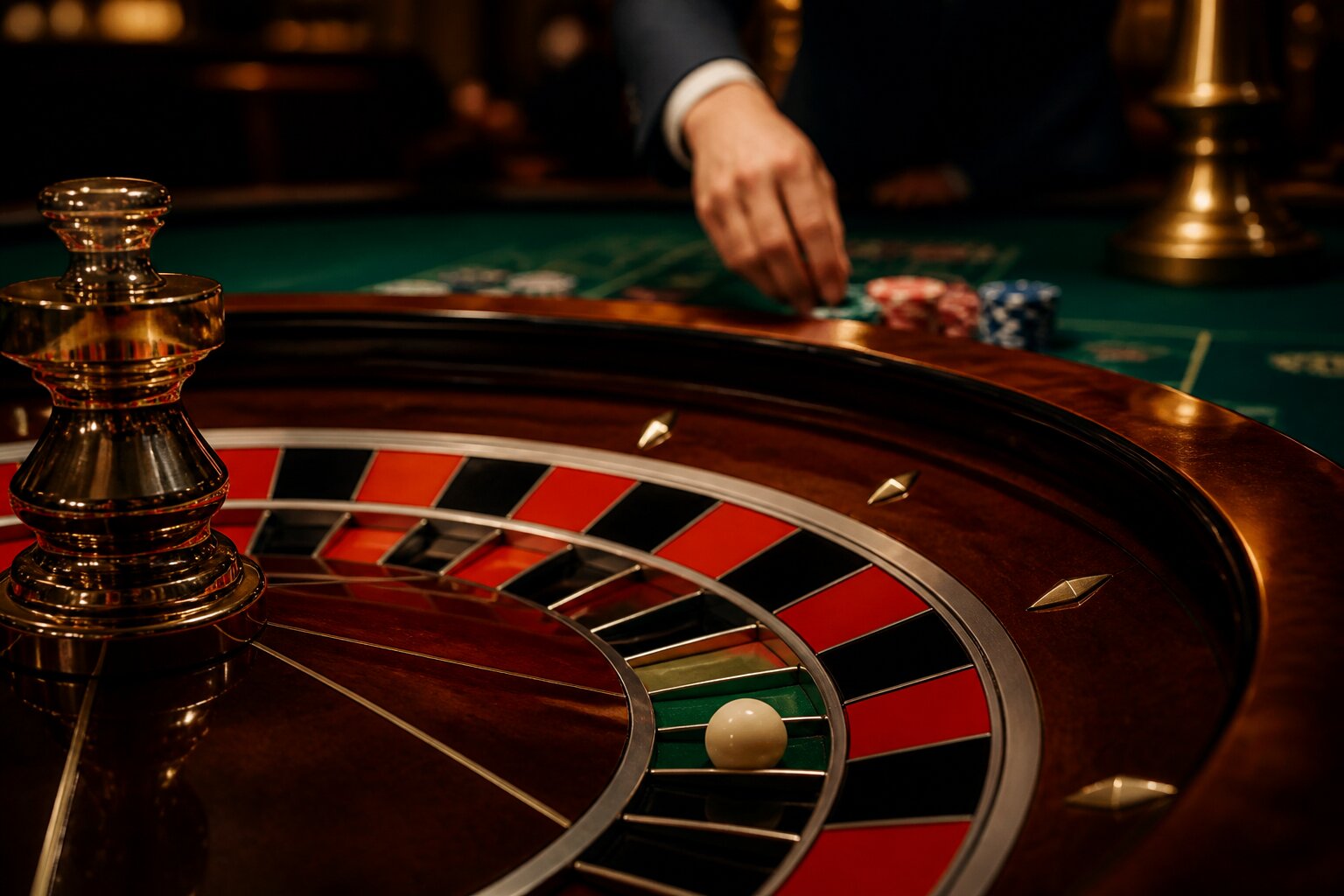
If you’ve ever watched the roulette wheel spin, you may have noticed the single green zero and wondered whether it changes the game. Betting on zero has its own appeal and a very specific role in how roulette payouts and odds work.
Many players ignore zero, but knowing how it affects your chances and potential returns can influence where you place your chips. Read on to understand the true probabilities, the payouts you can expect, and how the house edge changes between wheel types.
What Does Zero Mean in Roulette?
Zero is the distinct green pocket that separates roulette from other table games. It is not red or black, nor odd or even, so any bet on those categories loses when the ball lands on zero. That single rule is the main reason casinos hold an advantage.
On a European wheel there are 37 pockets, which includes one zero. The American wheel adds a double zero, making 38 pockets in total. That extra green slot increases the casino’s edge and is the key practical difference between the two versions.
Because zero is excluded from the even-money categories, it forces a small long-term advantage towards the house. The effect is simple and mechanical: fewer winning outcomes for those even-money bets whenever the ball stops on green.
How Often Does Zero Come Up in Roulette?
The chance of zero appearing is determined by the number of pockets on the wheel. In European roulette the chance is 1 in 37, about 2.70%. On an American wheel the single zero has a 1 in 38 (≈2.63%) chance, while a bet that covers both zero and double zero would have 2 in 38 (≈5.26%).
These probabilities are fixed for every spin; past results do not change future ones. Because of that, streaks or gaps where zero appears frequently or not at all are possible, but they do not alter the underlying percentages. If you prefer slightly better long-term odds, the European wheel is the more favourable choice because it contains only one green pocket.
What Are the Odds of Zero in European vs American Roulette?
We touched on the basic probabilities above, and it helps to see them side by side. A straight-up bet on the single zero has:
- European roulette: 1 in 37 (≈2.70%)
- American roulette: 1 in 38 (≈2.63%)
If you place a bet that covers both zero and double zero on an American wheel, the chance is 2 in 38 (≈5.26%). The extra green pocket increases the house edge noticeably, which is why many players who care about percentages choose European tables when they can.
The takeaway is that the difference may seem small on a single spin, but it compounds over many bets and affects expected returns over time.
What are the Payouts for a Zero Bet?
A straight-up win on zero pays 35 to 1 in both wheel types. Practically, that means a £1 stake returns £36 in total — £35 in winnings plus your original £1. That payout applies to any single-number straight bet on the table, not only zero.
To put that into context against the odds: on a European wheel the payment assumes a 1 in 36 chance, but the true chance for any single number including zero is 1 in 37. That mismatch between payout and actual probability is the source of the house edge. Even though 35 to 1 looks large, the real probability produces a small negative expectation for the player.
A worked example helps: wagering £10 on zero and winning would return £360 in total. However, because the chance of winning is about 2.70% on a European wheel, the expected return over many such £10 bets sits a little below the amount wagered, reflecting the house’s built-in advantage.
Understanding the House Edge on Zero Bets
The house edge is the percentage of all stakes the casino expects to keep over the long run. It comes from the difference between the payout and the true odds of winning. For a straight-up zero bet:
- European roulette: house edge ≈ 2.70%
- American roulette: house edge ≈ 5.26%
That higher figure for American tables is driven entirely by the extra green pocket. The edge is constant across all straight-up number bets; choosing zero does not change the mathematics compared with betting on any other single number.
In practical terms, the house edge means that while occasional wins can be substantial, repeated play on the same bets will, on average, yield returns slightly below total stakes. Understanding this makes it easier to set realistic expectations and decide whether a single-number strategy fits your goals for play.
If you want to weigh the potential outcomes, consider how volatility and bankroll size interact with these percentages. Single-number betting is high variance: wins are relatively rare but pay well when they happen. That volatility matters more to short sessions and smaller bankrolls than the modest percentage represented by the house edge.
Is Betting on Zero a Good Idea?
Whether betting on zero is a “good idea” depends on what you want from the game. As a purely numerical choice, a single-number bet carries the same structural disadvantage as any other straight-up bet. It gives a high payout but low probability, so it suits players who accept high variance and occasional big wins rather than steady, small returns.
For someone who prefers lower volatility, even-money bets on red/black or odd/even (with the knowledge that zero will still cause losses on those bets) produce more frequent, smaller outcomes. By contrast, a zero bet is a focused, high-risk option that can be used sparingly as part of a broader approach to play.
Whatever you decide, set limits that match the kind of session you want. That means choosing stakes and a time frame that keep the experience manageable and aligned with your budget.
Common Myths About Betting on Zero
This short list addresses a few recurring misconceptions, with a brief note after each to clarify why they don’t hold up.
- Zero is “due” to appear after a long gap — Each spin’s probability is unchanged by prior results, so gaps do not increase any number’s chance of appearing.
- Betting on zero gives a hidden advantage — house edge does not reduce the house edge; it exists precisely to create the small casino advantage on many bets.
- There’s a widely applicable strategy for zero bets — No proven system can overcome the mathematical edge; patterns seen in short sessions are not reliable indicators for future spins.
Keeping those points in mind helps you make clearer, more realistic choices about when or whether to place a zero bet.
Final note: understanding the odds, payouts and house edge puts you in a better position to decide if betting on zero fits your approach; use that knowledge to play deliberately and enjoy the experience while staying within your limits.
**The information provided in this blog is intended for educational purposes and should not be construed as betting advice or a guarantee of success. Always gamble responsibly.