
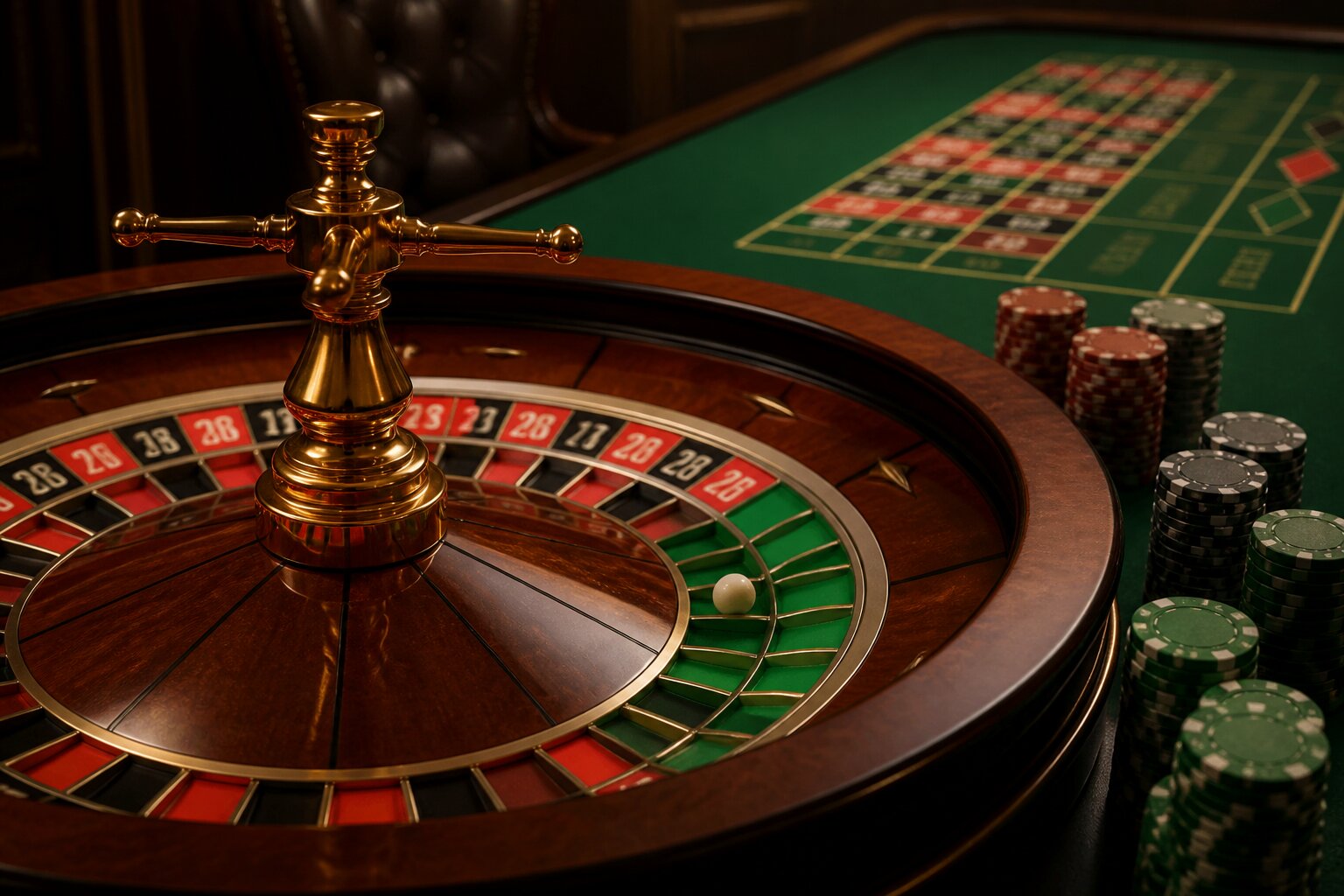
Ever watched a roulette wheel and noticed that bright green pocket sitting alone between red and black numbers? It looks simple, but that tiny space changes the mathematics and strategy of the whole game. This article explains what green payouts are, how they differ from other bets, and what to check before you place a chip on 0.
We’ll move through the main variants of roulette, the bets that involve green pockets, and the most common misunderstandings. Read on and you’ll come away with a clear sense of how green pockets affect odds and payouts.
What Are Green Spaces on a Roulette Wheel?
Green spaces are the pockets marked 0 (and 00 in some wheels) that separate the red and black numbers. In European and French roulette there’s a single-zero and double-zero formats; American roulette adds a double zero, so it has two green pockets.
These pockets don’t belong to the red or black groups and are often the reason different roulette variants offer different odds. They act as distinct outcomes you can bet on directly, and their presence affects the probabilities for other bets across the table.
Whether you play in a casino or online, noticing how many green pockets a wheel has is one of the quickest ways to understand the difference between versions of the game.
How Do Green Payouts Differ from Red and Black?
Green payouts differ because a green bet targets a single pocket (or two in American roulette) rather than a broad category. Red and black cover roughly half the numbers on the wheel and therefore pay even money (1:1). A straight-up bet on a green pocket typically pays 35:1 because it covers far fewer possible outcomes.
The mathematical gap between the payout and the true probability of a green outcome is what creates the house edge. Each spin is a random event, so the higher payout compensates for the smaller chance of winning. Understanding that relationship helps explain why green bets are riskier but potentially more rewarding in the short term.
Which Roulette Bets Involve the Green Numbers?
A small set of bets is built around the zero pockets, and they are handled differently depending on the table layout. European and French tables have a single green zero, while American tables have both a green 0 and a green 00, which affects the available bets and the house edge.
Straight-Up Bets
Placing a chip on 0 (and on 00 in American roulette) is a straight-up bet. If that exact pocket wins, the payout is usually 35:1. This bet covers only one pocket, so it offers the highest single-number payout but the lowest probability of winning.
Split Bets (Zero Splits)
Players sometimes split a chip between zero and an adjacent number, such as 0/1 or 0/2. These split bets pay around 17:1 if either number wins. On layouts with 00 the available adjacent splits differ slightly because of the extra pocket.
Basket Bet (American Roulette Only)
The basket bet covers 0, 00, 1, 2 and 3 on American tables and typically pays 6:1. It offers broader coverage across five pockets, so the potential return is lower than a straight-up green bet, and the house edge is correspondingly higher.
These options give different balances of risk and reward:
- The fewer pockets covered, the larger the payout for a win.
- The more pockets covered, the more likely a win, but the smaller the payout.
- Table layout matters: single-zero and double-zero formats change which bets are possible and the overall odds.
Why Are Green Numbers Important in Roulette?
Green pockets change the structure of the game. By sitting outside the red and black groups, they reduce the probability that those even-money bets will win, and that shift is central to how roulette’s payouts and house edge are established.
A successful straight-up green bet has one of the highest standard payouts on the table, which explains their appeal. At the same time, the odds of hitting those pockets are lower, so green bets tend to be occasional, higher-risk plays rather than the backbone of steady wagering.
Appreciating the role of green numbers makes it easier to choose bets that match your own priorities—whether you want to make occasional bold plays or prefer steadier, lower-variance stakes.
Are Green Payouts the Same in All Roulette Variants?
Green payouts are similar in form but differ in effect between variants because the number of green pockets changes. European and French wheels have a single zero; American wheels include both 0 and 00. The standard straight-up payout remains around 35:1, but the probability of that payout occurring is lower on an American wheel, which slightly increases the house edge.
These differences affect not just single-number bets but every wager on the table, since the green pockets alter the overall distribution of outcomes. When switching between table types, checking how many green pockets are present gives an immediate sense of how the odds will shift.
Common Myths About Green Payouts in Roulette
Several myths persist around green payouts. Common misconceptions include:
- That all rules and odds are identical across roulette versions. They are not: American roulette includes a 00 that changes the probabilities and increases the house edge compared with single-zero wheels.
- That certain betting patterns or systems can force a green outcome. No betting system can alter the underlying randomness of each spin or change the long-term probabilities.
A practical habit is to review the table’s payout chart and rules before playing so you know exactly what each bet covers and pays. That reduces surprises and helps you choose bets that match the level of risk you are comfortable with.
It is also useful to note small differences between games, such as the number of zeros or any special rules applied to the green pockets, because these can affect expected returns. Always treat each spin as an independent event and set clear limits for play to keep activity within your comfort zone.
How Do Green Payout Odds Affect the House Edge?
Green pockets are a primary factor in roulette’s house edge. Payouts are set so that they are slightly less than the true inverse of the probability of the outcome, and that gap is the casino’s advantage over time. Adding a double zero in American roulette increases that advantage because it adds another outcome that pays at the same rate but is less likely to be covered by each dollar staked.
No betting approach can change these built-in probabilities. Knowing how the green pockets feed into the house edge helps you weigh the trade-off between higher payouts and less frequent wins.
Summary: Key Points About Winning Green Payouts
Understanding green payouts lets you make clearer choices at the table and better anticipate how different bets behave.
Green Bets Are Unique
Bets on zero or double zero cover very few pockets and offer higher payouts in return.
Payouts and Odds Vary by Game
The number of green pockets (one or two) changes your chances and the overall house edge, so check the wheel type before playing.
No Guaranteed Wins
Roulette spins are random events; no system can alter the probabilities that determine outcomes.
Keep Stakes Appropriate
Set limits you’re comfortable with and treat betting as entertainment rather than a source of income.
If you’re ready to explore different roulette variants, pick a table type, note how many green pockets it uses, and choose bets that match the level of risk and reward you prefer.
**The information provided in this blog is intended for educational purposes and should not be construed as betting advice or a guarantee of success. Always gamble responsibly.