
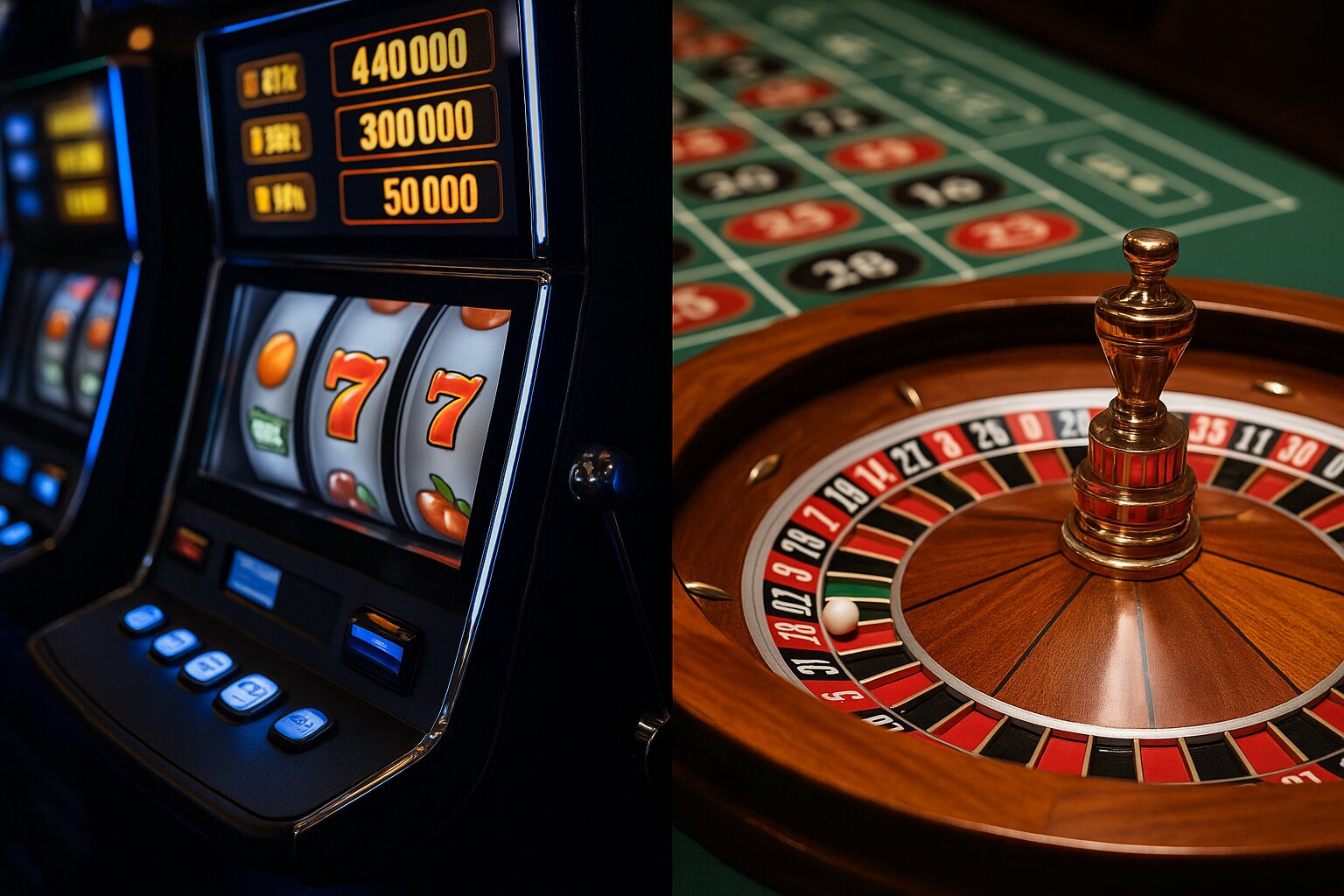
If you’ve ever walked into a casino or played online, you’ll know slot machines and roulette are two of the most popular games on offer. Each delivers a different experience—one driven by spinning reels and bonus features, the other by a wheel and the choices you place on the table.
This post looks at how the games differ, how each works, important odds and variations, common myths, and practical points to help you pick the style of play that suits you. Read on to get a clearer picture and decide which game fits your preferences.
Remember: neither game guarantees a financial return. Treat both as entertainment and keep control of your play.
What Are the Main Differences Between Slot Machines and Roulette?
At their core, the two games differ in interaction, decision-making and how outcomes are produced. Slots are electronic or digital games made of reels and symbols, where a random number generator (RNG) determines the combination that appears each spin. You set a stake and let the game play out, with wins triggered by symbol alignments and often enhanced by bonus rounds or free spins.
Roulette is a table game centred on a wheel with numbered pockets. Players place bets on a layout, choosing single numbers, groups of numbers, colours or parity (odd/even). The wheel is spun and the ball lands in one pocket to decide winners. Online versions use certified RNGs to replicate the same randomness as the physical wheel.
The key differences are that slots tend to be more automated and feature-rich, while roulette gives players more visible choices each round. That difference changes how you feel during play: slots offer immediate audiovisual feedback and varied mechanics, whereas roulette focuses attention on a shared moment when the wheel slows and the result is revealed.
How Do Slot Machines Work in UK Casinos?
Slots operate through an RNG that ensures each spin is independent. In licensed environments, operators must disclose the return to player (RTP) percentage for machines; RTP indicates the long-run average proportion of stakes returned to players across many spins. Typical RTPs on regulated UK slots often fall in a general range, and machines vary—some are designed with higher volatility, meaning bigger but less frequent wins, while others pay smaller amounts more often.
Modern online slots also include paytables and help screens explaining symbol values, bonus mechanics, and any special features such as cascading reels or expanding wilds. Those details affect how a session plays out: a game with many small wins may feel steady, while a high-volatility title can swing between long dry spells and large payouts. Age verification and player-account tools are required by regulation to support safe play.
How Does Roulette Work and What Are the Key Variations?
Roulette’s basic flow is straightforward: place bets on the layout, the wheel is spun, and the ball settles in a pocket to determine the outcome. Bets vary in risk and reward. Inside bets (single numbers, small groups) have lower probability but higher payouts; outside bets (red/black, odd/even, dozens) offer higher probability and smaller payouts.
The main wheel variations affect the house edge. European roulette uses a single zero (0) and is commonly found in UK venues, giving a typical house edge around 2.7% on straight bets. American roulette adds a double zero (00), increasing the house edge. French roulette resembles the European wheel but sometimes applies rules like “la partage” or “en prison” on certain even-money bets, which can reduce the effective house advantage in those cases.
Live dealer tables and virtual tables present the same options differently: live tables recreate the social atmosphere, while automated online tables can be faster and offer lower minimum stakes. Understanding how the variation you choose changes the odds helps you pick the format that fits your appetite for risk.
Which Game Offers Better Odds and Payouts?
Comparing odds involves two different measures: the RTP or payback for slots and the house edge on roulette bets. Slot RTPs are published figures that indicate the average return over a very large number of spins; individual sessions may deviate substantially from that average due to variance. Slot volatility is also important: low-volatility games return wins more frequently but usually smaller amounts, while high-volatility games offer less frequent but larger payouts.
Roulette odds are explicit and tied to the bet type. On a European wheel, a single-number bet has a low chance of success but pays 35:1, while outside bets roughly halve the payout in exchange for much better chances of winning. The house edge on a European wheel is generally about 2.7%, and higher on an American wheel because of the extra zero pocket.
Which is “better” depends on what you want: consistent smaller returns and clearer long-term averages (slots with a known RTP and lower volatility), or transparent math with a variety of bet types and predictable house edges (roulette).
What Myths Surround Slot Machines and Roulette?
Many myths persist because game mechanics aren’t always obvious to casual players. One common misconception is that past results affect future outcomes. In both slots and roulette, each round is independent, so earlier spins or spins on other machines don’t influence what happens next.
Another myth is that casinos can secretly alter games between plays. In regulated markets, certified RNGs and independent testing bodies monitor fairness; operators must follow clear standards and make key technical information available. Finally, people sometimes overstate the role of skill. Slots are fundamentally chance-based with design elements that shape variance, and standard roulette does not offer a method to change the odds; betting systems can alter variability but do not change the underlying probabilities.
Understanding these points helps you approach either game with realistic expectations.
Is One Game More Social or Entertaining Than the Other?
The social dynamic varies. Roulette tables naturally draw groups: multiple players place bets and react together when the wheel spins, which can feel communal in a casino setting. Online live roulette recreates some of that interaction via chat and a live presenter.
Slots are typically solitary, but game design can create its own excitement. Modern slots use cinematic themes, progressive jackpots and bonus features that build anticipation and present frequent moments of engagement. Online platforms can also introduce competitive elements like tournaments and chat features that create a sense of community without a physical table.
Which environment you prefer will shape your enjoyment: the shared tension of a table game or the individual, feature-rich experience of reels.
Are Slot Machines or Roulette Better for Beginners?
Beginners often find slots straightforward because they involve fewer choices: pick a stake and press spin. The game’s help pages usually explain symbols and bonus rules clearly, so a short read-through makes the experience accessible.
Roulette is also beginner-friendly, especially when starting with simple outside bets such as red/black or odd/even. The variety of betting options can feel overwhelming at first, but the differences are logical and visible on the layout, so newcomers can scale up their choices as they gain confidence.
Both games reward a little preparation: reading the rules, checking the paytable or bet layout, and choosing stakes that match your budget. That approach helps keep the experience enjoyable from the outset.
Which Game Has the Best Responsible Gambling Features?
Both game types are supported by common player-protection tools that help manage play. Operators typically offer deposit limits, session timers, and the ability to self-exclude or take a break. Pop-up reality checks and account history pages that show spending and play time make it easier to stay aware of activity.
Some features are more useful in particular contexts. Slot players may benefit from session reminders when engaging with rapid, continuous spins, while roulette players can use bet tracking to monitor how their choices affect balances over a sequence of rounds. Using these measures is a practical way to stay in control while enjoying either style of play.
Choosing the Right Game: What Should You Consider?
Think about what you want from the experience. If you enjoy simple mechanics and stylised bonus features, slots are likely to appeal. If you prefer transparent odds, a wider range of bet types and a more social table environment, roulette could be a better fit.
Consider your budget and how much volatility you’re comfortable with. Read the game’s help information so you understand RTP, bet options and any special rules. If you value interaction, look for live dealer roulette or slot tournaments; if you prefer a relaxed solo session, choose a slot with mechanics that match your pace.
Ultimately, pick the game that suits your temperament and play within limits you set yourself. Enjoy the entertainment, and keep your wellbeing the priority.
Whether you lean towards reels or a spinning wheel, both games offer clear, regulated frameworks and varied ways to enjoy them. Choose what fits your style and stick to sensible safeguards so your time playing stays positive and controlled.
**The information provided in this blog is intended for educational purposes and should not be construed as betting advice or a guarantee of success. Always gamble responsibly.