
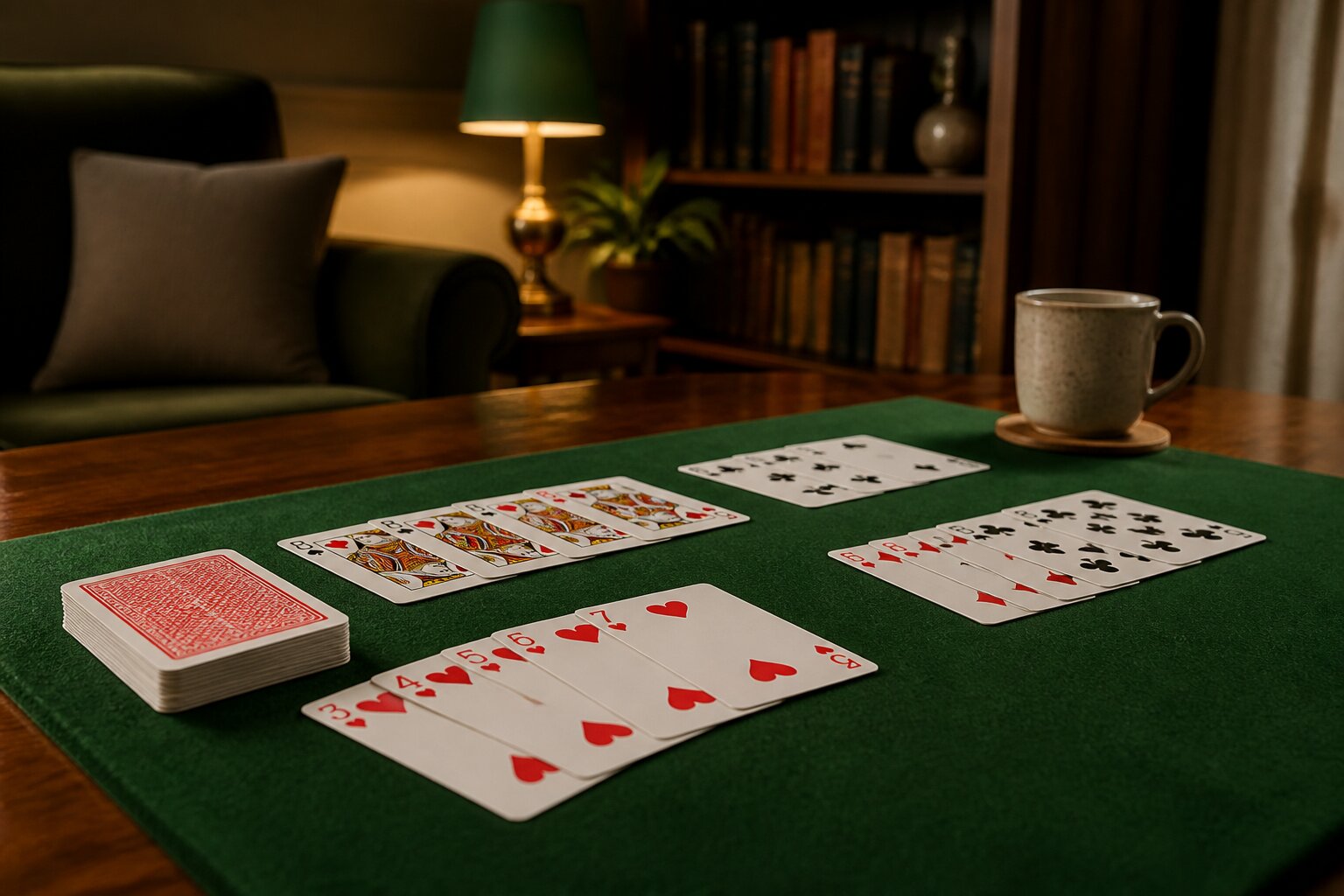
Rummy is one of the UK’s favourite card games, offering plenty of social fun for friends and families. Whether you’re a complete beginner or want to polish your basics, this guide will get you playing with confidence.
You’ll find clear explanations of the aim, how to set up, the rules that matter, and how scoring works. Read on to learn the practical details that will help you avoid common mistakes and enjoy a smooth game.
Ready to shuffle? Let’s start with what Rummy actually is and why people keep coming back to it.
What Is Rummy & Why Is It Popular?
Rummy is a classic card game where the main objective is to form combinations from the cards in your hand: either sets (cards of the same rank) or runs (consecutive cards of the same suit). Players draw and discard in turn, refining their hands until someone lays down valid combinations to finish the round.
The game has travelled widely and developed many regional forms, but most versions use a standard 52-card deck, sometimes combined with a second deck for larger games. Its appeal comes from straightforward rules that reward good observation and planning. Because each round develops differently, players need to adapt their strategy to what’s been played and what remains in the piles.
Rummy also works well with different group sizes and timeframes: a quick two-player round feels different from a longer game with several people, yet the same basic skills apply. That flexibility is a big reason the game stays popular.
How Many Cards Are Used In Rummy?
The number of cards dealt depends on the variation you choose. In one common format, each player receives 10 cards in a two-player game, while with three or more players the typical deal is 7 cards each. Another popular variant, Indian Rummy, usually gives 13 cards per player and often uses two decks plus jokers.
For larger groups you may combine two decks to ensure there are enough cards. Whatever you decide, place the remaining cards facedown to form the draw pile and turn one card face up to start the discard pile. Agreeing the deal and deck arrangement before you start prevents confusion later.
How Do You Set Up A Rummy Game?
Begin by confirming the variation and the number of players, then prepare the correct deck or decks. Shuffle thoroughly so the cards are well mixed, then deal the agreed number of cards to each player, one at a time and face down.
After dealing, gather the remaining cards into a facedown draw pile in the centre. Turn the top card of the draw pile face up beside it to create the discard pile. Players should arrange their hands so cards are clear to themselves but not visible to others.
Clarify any house rules — for example whether jokers are wild, how aces are treated in runs, and the target number of rounds or a score limit if you plan a longer game. A short confirmation at the start keeps play fair and enjoyable for everyone.
What Are The Basic Rules Of Rummy?
The aim is to arrange all your cards into valid sets or runs and then discard a final card to end the round. Play proceeds clockwise from the dealer’s left. On each turn a player takes one card, either from the top of the draw pile or the top of the discard pile, examines their hand, and discards one card face up onto the discard pile so they finish the turn with the same number of cards they started with.
Sets consist of three or four cards of the same rank but different suits. Runs are sequences of three or more cards in the same suit, such as 4-5-6 of hearts. A single card may not be used in more than one combination at the same time. When a player can place all their cards into valid combinations and discard the last card, the round is over and scoring takes place.
How Does Gameplay Progress In Rummy?
A round begins with the player to the dealer’s left and continues in order. Players constantly assess whether to pick from the discard pile (which can give an immediate advantage if it completes a set or run) or draw from the facedown deck to keep options open. As cards are revealed in the discard pile, information builds about which combinations are still possible, so observing opponents’ discards and picks is an important part of play.
When someone lays down their completed combinations, they place them face up for others to see, then discard their final card to close the round. If the draw pile runs out before a player goes out, the round may end as a draw, depending on the agreed rules; in that case, players score for any unmatched cards remaining in their hands.
Throughout play, keeping track of the exposed cards and adapting strategy as the round unfolds is what separates more experienced players from newcomers.
What Are Valid Sets And Runs In Rummy?
A valid set is a group of three or four cards of the same rank but different suits, for example 5♦ 5♠ 5♣. A valid run is a sequence of three or more cards in the same suit in consecutive order, such as 7♠ 8♠ 9♠. Aces are commonly allowed as either low (A-2-3) or high (Q-K-A), but not both within the same run; confirm which rule applies before you begin.
Jokers, when used, may act as wild cards to substitute for missing cards in a set or run, but rules on where and how many jokers can be used should be agreed beforehand. Respecting these definitions keeps the game clear and reduces disputes during play.
What Are The Scoring Rules In Rummy?
Scoring is simple: after a round ends, each player counts the value of any cards that are not part of valid sets or runs. Number cards 2–10 score their face value. Jacks, Queens and Kings each count as 10 points. An Ace typically scores 1 point unless your variation specifies otherwise.
The player who laid down all their cards scores zero for that round. Other players add up the points for unmatched cards; over a series of rounds the person with the lowest cumulative score is the overall winner. If a round ends because the draw pile is exhausted, players usually still count unmatched cards to determine the round’s point totals, even if no one technically “won” that hand.
A single, clearly stated scoring system agreed before play keeps results consistent across rounds.
Is There A Winner In Every Round?
Sometimes a round finishes without a player going out, for example when the draw pile runs out. In that case players still tally points from unmatched cards, but there may be no round winner. The overall outcome typically depends on cumulative scoring across several rounds, so consistency matters more than one-off results.
Responsible play and agreed limits help make multi-round scoring enjoyable and manageable for everyone.
Common Myths About Rummy Rules
Because Rummy has many variants, misunderstandings can spread easily. One myth is that jokers are always required; many traditional versions play fine without them and only use jokers if all players agree. Another misconception is that sets can include more than four cards; standard practice limits sets to three or four cards of the same rank.
People also sometimes assume the person who goes out automatically wins the whole game. In most formats a single round win only affects that round’s score; the final winner is decided after several rounds based on cumulative points. Clearing up these points before you begin avoids arguments later and keeps the focus on playing well.
Frequently Asked Questions About Rummy Card Numbers And Rules
Below are answers to common questions about card numbers and gameplay so you can set up and play with confidence.
Can you play Rummy with a different number of cards?
Yes. Different versions use different hand sizes: for example, 10 cards per player in some two-player formats, 7 cards for larger groups, and 13 cards in Indian Rummy. Agree the number at the start so everyone knows what to expect.
What happens if the draw pile runs out?
If the draw pile finishes before anyone goes out, the round normally ends and players score the value of any unmatched cards in their hands. Some groups choose house rules that recycle the discard pile, but that must be decided before play.
Are jokers always used in Rummy?
No. Jokers are optional and act as wild cards only when the group agrees. Decide whether jokers are allowed and how they may be used before dealing.
Can you use the same card in more than one combination?
No. A card may be part of only one set or run at any time, which keeps combinations distinct and scoring unambiguous.
What’s the best way to play Rummy responsibly?
Set clear limits on time and stakes, agree rules before starting, and take breaks between long sessions. Keeping the game social and controlled ensures everyone can enjoy playing.
Keep these points in mind and you’ll be ready to deal, build combinations, and score rounds with confidence. Have fun at the table and enjoy the challenge Rummy offers to memory and planning.
**The information provided in this blog is intended for educational purposes and should not be construed as betting advice or a guarantee of success. Always gamble responsibly.