
Everyone dreams of finding a winning formula for roulette, but the truth behind the spinning wheel is more complex than it first appears. Whether you are new to the table or have played for years, a clear grasp of probability, betting systems and perceived patterns helps you make better decisions before you place your chips.
This guide explains how the game works, examines common systems and myths, and sets out what is—and is not—possible when you play. Read on to separate useful information from misleading ideas and to leave the table with realistic expectations.
How Does Roulette Work?
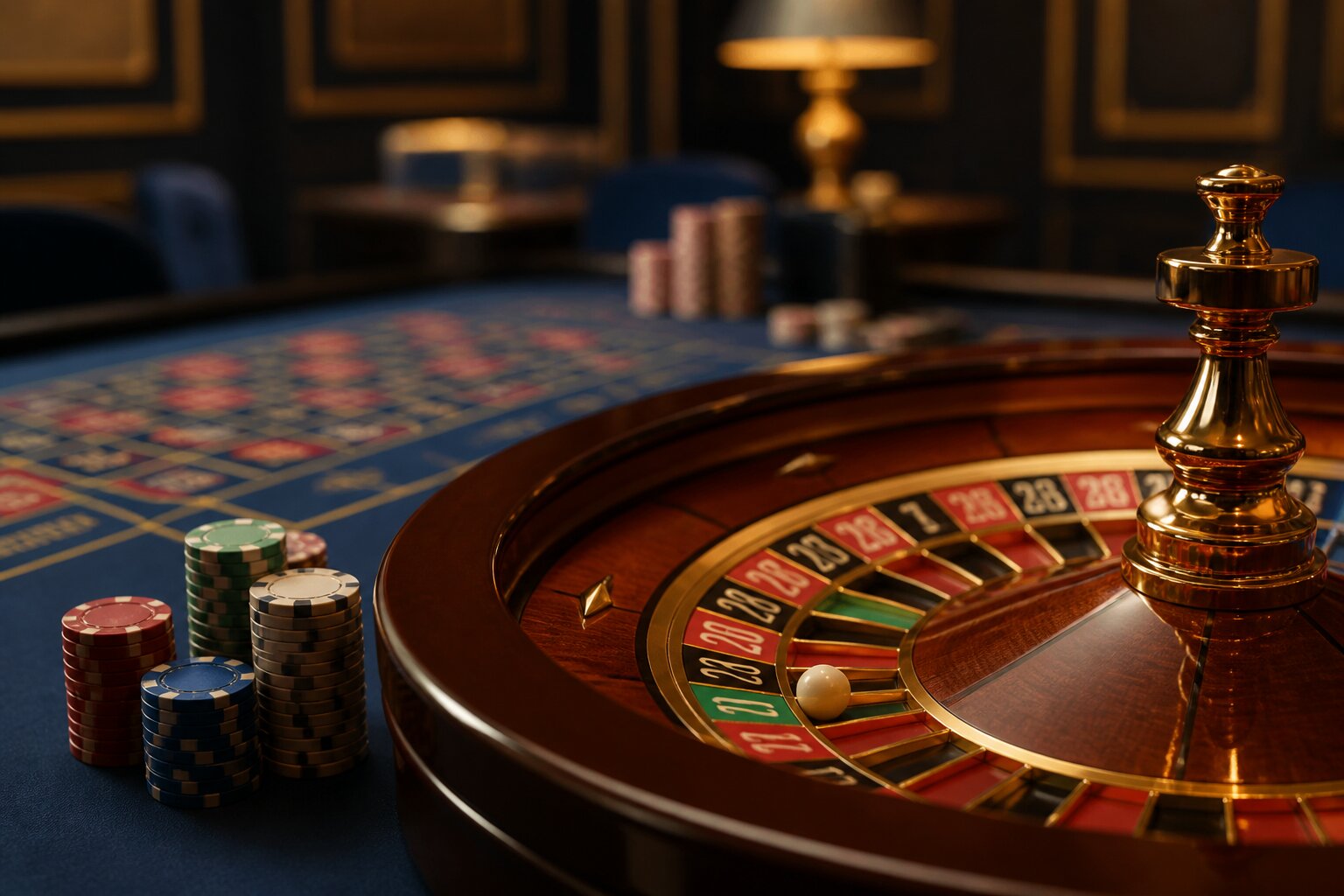
Roulette uses a numbered wheel, a small ball and a betting layout where players place chips to predict the ball’s final pocket. The two main wheel formats differ by pocket count: European wheels have 37 pockets (numbers 1–36 plus a single zero) and American wheels have 38 pockets (an extra double zero). All numbered pockets are red or black; zero or zeroes are green.
Players can choose from a variety of bets offering different payouts and probabilities. Bets range from a single number (a straight up), to groups of numbers, to colour bets (red or black), and to even-money options such as odd or even and high or low. The payout for a successful straight up bet is large because the chance of a win on a single number is small, while even-money bets pay less because they cover more pockets.
After bets are placed, the wheel is spun and the ball released. When the ball stops in a pocket, winning bets are paid according to the table’s odds and losing bets are cleared. The rules and paytable are visible at the table or within the game software, so it is straightforward to check how each bet works. Knowing which wheel variant you are playing matters, as the extra zero in the American format changes the odds and payouts.
Understanding Probability in Roulette
Probability describes how likely an event is to occur and is central to understanding roulette results. Each spin is independent, so earlier outcomes do not change the chance of any future result.
For example, on a European wheel with 37 pockets, a single number has a 1 in 37 probability, about 2.7%. An even-money bet such as red or black covers 18 pockets out of 37, which is around 48.6 percent, slightly below half because of the green zero. On an American wheel, a single-number bet is 1 in 38, about 2.63 percent, and even-money bets sit at a slightly lower probability because of the additional green pocket.
These percentages describe long-run frequencies rather than guarantees for a particular session. You can encounter runs of the same colour or number repeats in the short term; this is natural variation rather than an indication of a change in the underlying odds. Understanding these probabilities helps you set realistic expectations about how often different bets are likely to pay out.
Popular Betting Systems Explained
Many players explore betting systems that suggest how much to stake after wins or losses. No system can alter the underlying probabilities or remove the house edge, which is a fixed aspect of the game. Betting systems can shape how you manage your money and how long you stay at the table, but they do not change the maths.
Systems are often described in terms of risk and bankroll requirements. Some are aggressive and aim to recover losses quickly, which carries a high chance of reaching table limits or depleting a bankroll. Others increase bets more slowly, reducing short-term volatility but still unable to change the fundamental odds. Approaching any system with clear limits and an understanding of its financial implications is essential.
The Martingale System: Does It Work?
The Martingale is straightforward in concept: after a loss, double the previous bet so that a subsequent win recovers losses and yields a small profit. In practice, however, this approach can demand very large wagers after only a few losses. Table maximums and finite bankrolls mean a recovery is not guaranteed, and the house edge remains unchanged.
Because the system relies on eventual wins within a limited number of spins to succeed, it exposes players to rapid increases in stake size and potential large losses. That makes it a high-risk approach rather than a reliable means of achieving consistent returns.
Exploring the Fibonacci Sequence in Betting
The Fibonacci method adjusts bet sizes using the well-known numerical sequence where each number equals the sum of the two before it. Applied to betting, stake increases are more gradual than with Martingale, which can help limit short-term swings. The idea is to progress through the sequence after losses and step back after wins.
While the progression can provide a more measured way to manage bets, it still cannot overcome the house edge or change the independent probability of each spin. Players who use this method typically value its structured progression for bankroll discipline rather than as a way to ensure profits.
Do Patterns Really Exist in Roulette?
Spotting sequences such as a run of reds or repeated numbers is a common pastime at the roulette table. People record outcomes and look for trends that might suggest a next result. It is important to distinguish between visual patterns and statistical dependence. Apparent streaks are a normal outcome of random processes and do not indicate predictability of future spins.
Tracking hot and cold numbers or following trends may make the session feel more engaging, and for some players it informs their betting choices. From a mathematical standpoint, however, these approaches do not change the underlying odds. If you take notes to satisfy curiosity, understand that the notes reflect recent variation rather than a shift in the wheel’s behaviour.
If you are interested in wheel bias or mechanical imperfections, those are different topics. In land-based games, a physically imperfect wheel could, in theory, produce non-uniform outcomes. Detecting and proving a bias requires systematic, long-term observation and professional analysis; it is not something that results from casual spotting of short-term streaks.
Common Myths About Beating the Wheel
There are several persistent misconceptions about beating roulette. One is that previous spins influence future outcomes, which conflicts with the independence of each spin. Another is that experienced players can read the table for hidden signals. In reality, short-term streaks and repeat numbers are expected within random sequences and do not provide reliable foresight.
Myths often arise from anecdotes and cognitive biases that make coincidences feel meaningful. That can lead to overconfidence in a system or strategy and to betting choices that exceed one’s bankroll. A practical approach is to evaluate strategies by how they affect your playstyle and budget rather than by promises of improved odds.
Understanding why these myths persist helps guard against decisions based on false assumptions and supports a more measured approach at the table.
House Edge: What Does It Mean for Players?
The house edge is the percentage advantage the casino holds over players in the long run. It is embedded in the payout structure of each bet and differs according to wheel type. European roulette’s single zero produces a house edge of about 2.7 percent. With two zeros, the American wheel’s edge is roughly 5.26 percent.
This advantage does not guarantee losses on any particular spin, but it does mean that, across many bets, the casino retains a small portion of total stakes. No betting system or pattern-based strategy can overcome this built-in edge. Being familiar with the house edge allows you to compare variations of the game and select bets that align with your expectations and comfort with risk.
Can Probability Help You Win at Roulette?
Probability equips you with the language to describe your chances and to understand long-term expectations. It does not, however, convert into a method for consistently beating the game. Each bet has a known probability and expected return; using this information helps you choose which bets suit your goals, whether that is lower volatility or the chance of a large payout.
In practical terms, you can use probability to manage risk. For example, choosing even-money bets tends to produce more frequent smaller wins and smaller swings in your balance, while straight up bets are less likely to win but pay out more when they do. Analysing your play through the lens of probability clarifies what to expect from different bet types and supports informed decision making during a session.
Probability is a tool for planning and understanding, not a way to alter outcomes. Treat it as part of your knowledge base to play with awareness rather than a path to beat the house.
Responsible Play & Setting Realistic Expectations
Playing roulette should be undertaken with clear limits and realistic aims. Money put on the table is the cost of entertainment. Before starting a session, deciding on an affordable budget and a time limit helps prevent stakes from rising beyond what you can manage. Many operators provide built-in controls to help set deposit, loss and session limits.
Enjoyment from the game comes from the experience rather than the expectation of profit. If play stops being enjoyable or you find it difficult to stay within limits, draw on available support and advice. Setting boundaries and reflecting on your behaviour are practical steps to keep play under control.
Final thought: understanding the game, its probabilities and its limits makes for a clearer, more responsible experience at the roulette table. If you would like, we can look at specific bet types or compare the probable outcomes of different strategies to help you choose how to play.
**The information provided in this blog is intended for educational purposes and should not be construed as betting advice or a guarantee of success. Always gamble responsibly.