
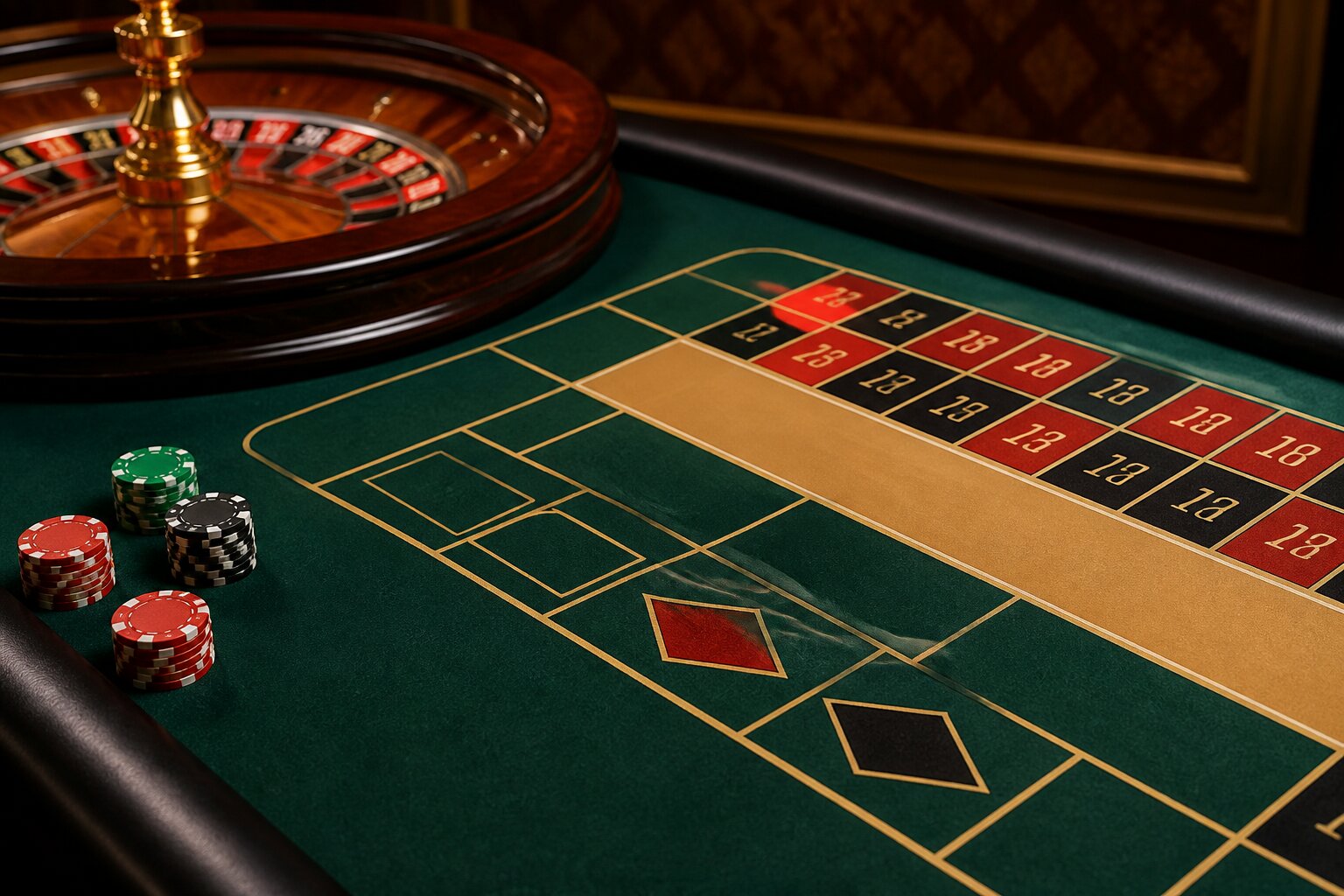
Fancy trying something new at the roulette table? The 2 dozen strategy is a simple, easy-to-understand approach that changes how you cover the table without adding complicated rules.
This article explains how the 2 dozen bet works, what to expect from its odds and payouts, how it compares with other bets, and the common misunderstandings around it. Read on to see whether it fits your style of play.
Before you place a stake, it helps to know how the bet is structured and what covering 24 numbers actually means.
What Is the 2 Dozen Bet in Roulette?
The 2 dozen bet covers two of the three groups of 12 numbers on a standard European or French roulette layout. The table divides the numbers into three dozens:
1st dozen: numbers 1 to 12
2nd dozen: numbers 13 to 24
3rd dozen: numbers 25 to 36
When you place chips on any two of these dozens, you are covering 24 out of the 36 non-zero numbers for that spin. That large coverage changes how frequently you see winning outcomes compared with smaller bets, while leaving the underlying probabilities unchanged.
This approach is straightforward to place on the table and easy to follow from spin to spin, which is why many players favour it as a way to keep play moving.
How Does the 2 Dozen Strategy Work?
To use the 2 dozen strategy, a player selects two of the three dozen bets and places equal stakes on each. For instance, staking £1 on the 1st dozen and £1 on the 2nd dozen means 24 numbers are covered for that spin. If one of the chosen dozens wins, the winning bet pays out while the other stake is lost.
Players vary in how they apply this: some stick with the same two dozens for many spins, others switch their picks regularly. Equally, some set a target—either a winning threshold or a limit on the number of spins—and stop once that is reached. These choices shape the experience and the risk profile without altering the table’s built-in probabilities.
Because the bet covers most of the non-zero numbers, wins occur relatively often compared with single-number bets, but the payout structure and the house edge still determine long-term results.
To see how this plays out in practice, the next section examines the specific odds and payouts you can expect.
Odds, Payouts & House Edge for the 2 Dozen Bet
Each dozen bet covers 12 numbers and pays 2 to 1 on a win. On a European wheel, which includes a single zero, the 2 dozen strategy means you are betting on 24 of the 37 possible outcomes (24 numbers plus the zero which is not covered).
The probability of the ball landing on one of your chosen dozens is roughly 64.9% per spin on a European wheel. When one of your dozens wins you receive the 2 to 1 payout on that bet, while the stake on the other dozen is lost. If the spin lands on zero or on a number outside your selected dozens, both bets lose.
The house edge on European roulette is 2.7%, and that percentage reflects the built-in advantage the casino holds over many spins. No betting approach can change this mathematical edge; strategies only affect how risks and wins are distributed across individual sessions.
With those figures in mind, the next section compares the 2 dozen bet with other common roulette options so you can see how it fits different playing preferences.
Why Choose the 2 Dozen Bet Over Other Options?
Players often choose the 2 dozen bet because it strikes a balance between frequency of wins and simplicity. By covering 24 numbers you experience more winning spins than when betting on single numbers, while keeping the decision-making straightforward—pick two dozens and place equal stakes.
Compared with straight-up bets on single numbers, which pay 35 to 1 but cover only one number, the 2 dozen bet produces more frequent, smaller outcomes. Versus even-money bets like red/black or odd/even, which cover 18 numbers and pay 1 to 1, the 2 dozen covers more numbers but offers a different risk-return mix because of the 2 to 1 payout on dozens.
Ultimately, the choice depends on what a player wants from a session: higher potential single-spin returns with greater volatility, or more regular, lower-value wins. Each approach leaves the house edge intact, so personal preference and bankroll management are the guiding factors.
If you’re wondering how that misconception of predictable results arises, the next section clears up a few common misunderstandings.
Common Pitfalls & Misconceptions About the 2 Dozen Bet
One persistent misconception is that any strategy can beat the house. The reality is that the house edge remains in place, and no pattern of bets changes the underlying probabilities.
Another mistaken belief is that past spins influence future outcomes. Each spin is an independent event governed by the table’s mechanics or, in online games, by certified random number generators; prior results do not alter the chances on the next spin.
Some players expect steady profits from the 2 dozen approach because it wins more often than a single-number bet. While wins are more frequent, the payout and occasional losing runs mean that net results vary. It’s important to frame expectations around variability: frequent smaller wins can be offset by the occasional wider loss, especially when zero appears or the spin falls outside the chosen dozens.
Understanding these points helps keep the strategy in perspective and makes choice of stakes and session length clearer.
Now that the basics and pitfalls are covered, it’s useful to look at where you can use this bet and how the environment differs between live and online play.
Can You Use the 2 Dozen Bet in Online and Live Casinos?
Yes—the 2 dozen bet is available both at physical tables and in online roulette games. The mechanics of placing the bet are the same, but the playing environment brings different practicalities.
In live casinos you place physical chips on the layout and watch the wheel and dealer; the pace, social atmosphere and table minimums or maximums can affect how you manage stakes. Online versions use an electronic table or live-dealer video stream; automated games rely on certified random number generators while live dealer tables use actual wheels and balls. Online play often allows quicker spins, clearer records of past outcomes, and easy stake adjustments, while live play offers the tactile experience of a table.
Table limits, bet increments and the presence of zero are consistent factors you should check before you start. Whichever environment you choose, the maths and odds remain the same, so adapt your stake size and session plans to the setting and to your own limits.
Next, we cover how to keep play controlled and enjoyable so it stays a clear entertainment choice.
Responsible Play and Setting Limits
Keeping play controlled means deciding in advance how much you are willing to stake and how long you will play. Those personal boundaries help keep the experience positive and manageable.
Setting limits can take simple forms: a maximum amount to spend in a session, a time limit, or a predefined point at which you stop whether you are ahead or behind. These practices reduce the risk of unintended overspending and make it easier to step away when you planned to.
If gambling begins to have a negative effect on everyday life, there are support organisations that provide advice and help in the UK, including BeGambleAware and GamCare. Age verification and other checks exist to protect players and should always be completed where required.
If you’d like to try the 2 dozen approach, consider starting with modest stakes to see how the pattern of wins and losses feels for you, and adjust your session boundaries accordingly. That way you can try the strategy while keeping control and maintaining clear expectations.
**The information provided in this blog is intended for educational purposes and should not be construed as betting advice or a guarantee of success. Always gamble responsibly.