
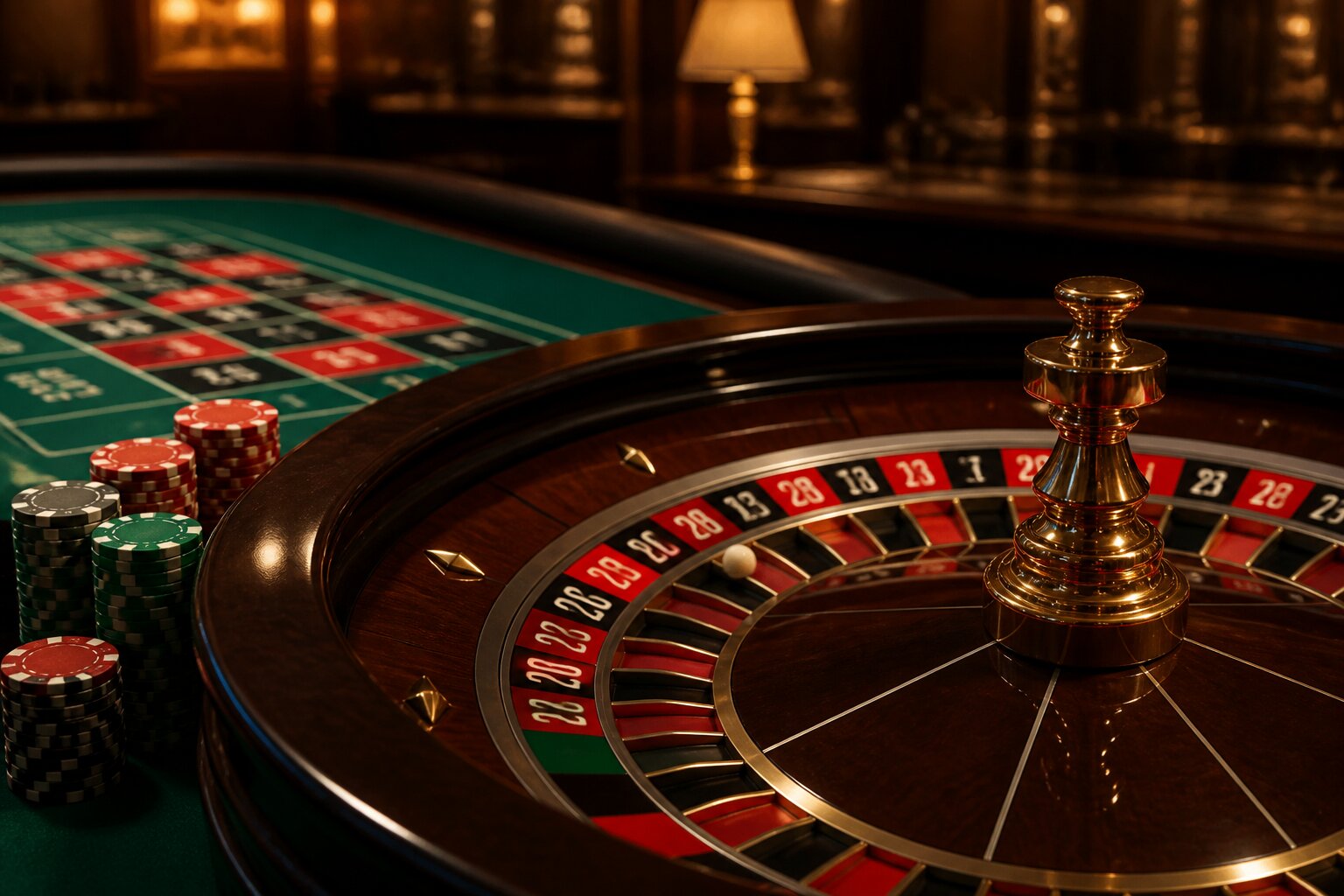
Roulette is one of the best-known casino games. The spinning wheel, the bouncing ball and the moment the result appears create a unique kind of tension that keeps people watching round after round.
Many players notice runs of the same colour or clusters of high or low numbers and wonder whether those patterns mean anything. This article explains the most common patterns you’ll see, why they appear, and what they do — and don’t — tell you about future spins.
Read on to understand how these patterns form, how players react to them, and what to keep in mind when you’re watching the table.
What Are The Most Recognised Patterns In Roulette?
Players frequently point to a few recurring shapes in the sequence of results. These are easy to follow visually and often spark discussion at the table:
- Red or Black Streaks
- Odd or Even Runs
- High or Low Numbers
- Neighbour or Section Patterns
Red or Black Streaks
A series of consecutive reds or consecutive blacks is one of the most obvious sights. Seeing five of the same colour in a row is memorable because it breaks the expectation of alternation, even though it is entirely consistent with random outcomes.
These streaks draw attention because people naturally look for order, but they do not change the underlying probabilities. Each spin remains an independent event and past colours do not influence future spins.
Odd or Even Runs
Sometimes the result line shows many odd numbers in succession, or many even ones. These runs are simply another way randomness can cluster — they catch attention because they form a simple, recognisable pattern.
Players may be tempted to treat a run as meaningful, but statistically it is just a short-term fluctuation. Over many spins the distribution of odd and even tends to even out in line with chance.
High or Low Numbers
Players also watch for groups of results from 1–18 or 19–36. Such concentrations can produce the sense that “that half” of the wheel is being favoured, but they are just another type of short-term variance.
Even when one half appears concentrated for a spell, that does not indicate a reliable trend. Each spin offers the same odds regardless of previous outcomes.
Neighbour or Section Patterns
Occasionally results land in nearby pockets on the wheel or repeatedly hit the same section. This can happen by chance but, in rare physical cases, can also hint at a wheel bias; however, in modern regulated environments the latter is uncommon because wheels are maintained and checked.
Where operators regularly inspect and balance equipment, persistent section clustering is unlikely. Any suspected mechanical bias should be reported to staff for investigation rather than treated as a dependable advantage.
These patterns are easy to spot and fun to follow, but they do not provide a reliable basis for predicting future results.
How Do Patterns Occur During Roulette Sessions?
Patterns emerge because randomness often produces clusters and streaks over short runs. In a long series of independent spins, you will see times when similar outcomes bunch together and times when they scatter. That is simply the nature of random sequences: apparent groupings appear and then dissolve, without indicating a change in the underlying odds.
Human perception plays a role too. The mind naturally looks for structure and is inclined to spot meaningful shapes in noise. It is also more likely to remember striking runs than unremarkable stretches, which makes unusual sequences feel more significant than they really are.
Several cognitive effects contribute to this impression:
- pattern-seeking behaviour that finds order in randomness
- selective memory that recalls dramatic streaks more readily than ordinary results
- a tendency to infer meaning from short-term variability even when none exists
When you watch a session, brief clusters are normal and expected. They form part of how random processes behave in the short term and do not imply any persistent trend or predictable shift. Over many spins, outcomes will tend to reflect the game’s fixed probabilities, not transient patterns you observe in a single session.
Are Roulette Outcomes Truly Random Or Do Patterns Exist?
Roulette outcomes are intended to be random. In electronic play, outcomes are produced by software designed to generate unpredictable results and regularly tested for fairness. In physical games, the combination of wheel design, ball dynamics and dealer action produces results that are effectively independent from spin to spin.
That does not mean patterns never occur — they appear frequently as a natural property of random sequences. The key point is that they are coincidences rather than signals. Where a physical wheel repeatedly favours a narrow set of pockets, that would be a maintenance or calibration concern; such issues are rare in regulated venues due to routine checks.
Understanding the distinction between observed short-term patterns and the underlying randomness helps explain why patterns catch the eye without changing the long-term probabilities.
Do Experienced Players Use Patterns To Make Decisions?
Some players enjoy monitoring patterns and letting those observations influence small choices. For instance, they might prefer to place a bet on a colour that has recently appeared several times purely because it feels like part of the game’s narrative.
Evidence does not show that this approach improves long-term results. Experienced players who focus on sound bankroll control and sensible limits tend to fare better at preserving their funds than those who escalate stakes in response to perceived trends.
Many seasoned participants treat pattern-watching as a social or entertainment element — something that makes a session more interesting — rather than a genuine edge.
Why Do People Believe In Predicting Roulette Results?
Belief in prediction often stems from natural cognitive biases. People look for patterns and cause-and-effect explanations, so when certain outcomes repeat they can feel like meaningful signals rather than chance. Confirmation bias and the tendency to remember hits more than misses both contribute to this impression.
Common psychological factors include:
- apophenia, the tendency to perceive connections or patterns in random data;
- the gamblers' fallacy, expecting a reversal because an outcome has appeared repeatedly;
- illusion of control, the belief that one can influence or predict random events.
The perceived excitement of spotting a pattern enhances engagement and makes it tempting to interpret sequences as informative. That emotional rush can reinforce selective remembering and repeated testing of the same ideas, even when they lack statistical support.
Being aware of these tendencies helps keep reactions to patterns in perspective and reduces the risk of over-interpreting random clusters. Remembering that each spin is independent and governed by chance encourages safer, more responsible decision making.
Pattern Myths: Can You Really Beat The Wheel?
Many myths claim that following patterns or using specific betting methods will overcome the game’s built-in advantage. In reality, no system can alter the statistical edge that the game holds over time. That edge is a product of the game rules and payout structure, and it applies across every spin.
Short-term winning streaks can and do happen, but they are not evidence that a method will continue to work. Randomness and the independence of each spin mean outcomes do not “remember” previous results. As a result, apparent patterns are usually coincidental rather than predictive.
Common reasons why systems fail include:
- the persistent house edge embedded in the rules and payouts,
- each spin being independent, so past results do not influence future outcomes,
- and the role of chance, which produces clusters and streaks that can be mistaken for meaningful patterns.
Avoiding exaggerated promises and understanding the mathematical basis of the game keeps expectations realistic and helps reduce the risk of harm. Knowing the limits of any approach makes it easier to set sensible stakes, time limits, and loss limits.
If you find a particular approach enjoyable, it is best framed as part of the entertainment rather than a reliable financial strategy. Treat any system as a way to add structure to play, not as a method to guarantee profit, and always gamble responsibly.
How To Spot Streaks & Sequences In Roulette
Spotting streaks is mostly an observational activity. Many live and online tables provide a visual history of recent results, which makes clusters of outcomes easy to see. A streak is simply a run of the same attribute — colour, parity or number range — while a sequence refers to several similar results grouped together.
These displays are useful for anyone who likes to follow patterns, but they do not change the underlying odds. Observing outcomes can add a storytelling element to play, and for those who enjoy it the visual history is a handy way to stay engaged without relying on it for decision-making.
Risks Of Relying On Patterns At The Casino
Putting too much weight on patterns can lead to poor choices. One common risk is increasing stakes to chase perceived trends, which can quickly erode a gambling budget. Another is assuming past outcomes will influence future spins, a misunderstanding that can make losses feel personal and escalate risk-taking.
Relying on patterns also distracts from the reality that most games are designed with a house edge and random outcomes. This can cause players to overlook volatility, misjudge risk, and make repeated bets that are unlikely to improve long-term results. Over time, that behaviour can reduce enjoyment and increase financial and emotional strain.
Practical measures can help keep play measured and reduce harm. Useful steps include:
- setting and sticking to a money limit before you start,
- deciding on a time limit and taking regular breaks,
- avoiding the temptation to increase stakes to chase losses,
- using venue safer-play tools such as self-exclusion, deposit or loss limits, and time reminders,
- seeking support from trained services if gambling feels less enjoyable or harder to control.
If play ever starts to feel less enjoyable or you find it harder to control, the venue’s safer-play options and external support services can provide assistance and confidential advice. Keeping pattern-watching as a pastime rather than a directive helps protect both funds and wellbeing.
Should You Trust Roulette Systems That Claim Pattern Prediction?
Systems or products that promise reliable prediction based on observed patterns should be treated with caution. Roulette outcomes are governed by chance and the house edge, and the statistical foundations of the game do not support claims of guaranteed returns from pattern-based methods. Occasional streaks or apparent sequences are normal in random processes and do not indicate a reliable, repeatable advantage.
There are rare historical cases of mechanical bias on poorly maintained wheels, but modern casinos and regulated online operators routinely inspect and maintain equipment to prevent such issues. That means any real, exploitable physical bias is unlikely in licensed venues, and claims based on pattern prediction are not a substitute for understanding probability and risk.
Scepticism is sensible: if a system promises certain winnings, it is likely overstating what is possible. Be wary of grand claims, selective testimonials, and pressure to buy or subscribe. Taking a critical view and verifying evidence will reduce the chance of being misled.
If you choose to explore different approaches, keep them modest and reversible, and focus on maintaining control over spending and time spent playing. Practical precautions include:
- Set a strict budget and never gamble money you cannot afford to lose.
- Use low stakes while testing any method, so losses are limited and reversible.
- Apply time limits to sessions to avoid chasing perceived patterns during extended play.
- Avoid increasing bets to recover losses; this often increases risk without changing the odds.
- Treat play as entertainment rather than income, and seek support if gambling starts to cause harm.
Summary: Patterns, Probability, And The Roulette Experience
Roulette often produces short runs and clusters that are easy to spot and fun to watch. These patterns are normal manifestations of randomness and do not offer a dependable way to forecast future results.
No system or pattern reliably changes the game’s probabilities, so the most effective way to preserve your bankroll is managing stakes and expectations. Enjoy following patterns as part of the experience, but keep them in perspective and avoid using them as the sole basis for larger bets.
If play becomes harder to manage, support services such as BeGambleAware and GamCare can provide confidential advice. With clear limits and a sensible approach, roulette can remain an engaging part of an evening without compromising wellbeing.
**The information provided in this blog is intended for educational purposes and should not be construed as betting advice or a guarantee of success. Always gamble responsibly.