
Ever found yourself wondering if it’s possible to enjoy a game of blackjack on your own, without the crowd or the noise of a busy casino? Maybe you prefer a bit of peace while you practise, or you want to focus on strategy without distractions.
You’re not the only one curious about solo blackjack — many players explore it to learn the rules, sharpen decision-making, or simply because they like playing at their own pace.
This guide explains what solo blackjack looks like, how you can play it, and whether it might suit you.
What Is Solo Blackjack?
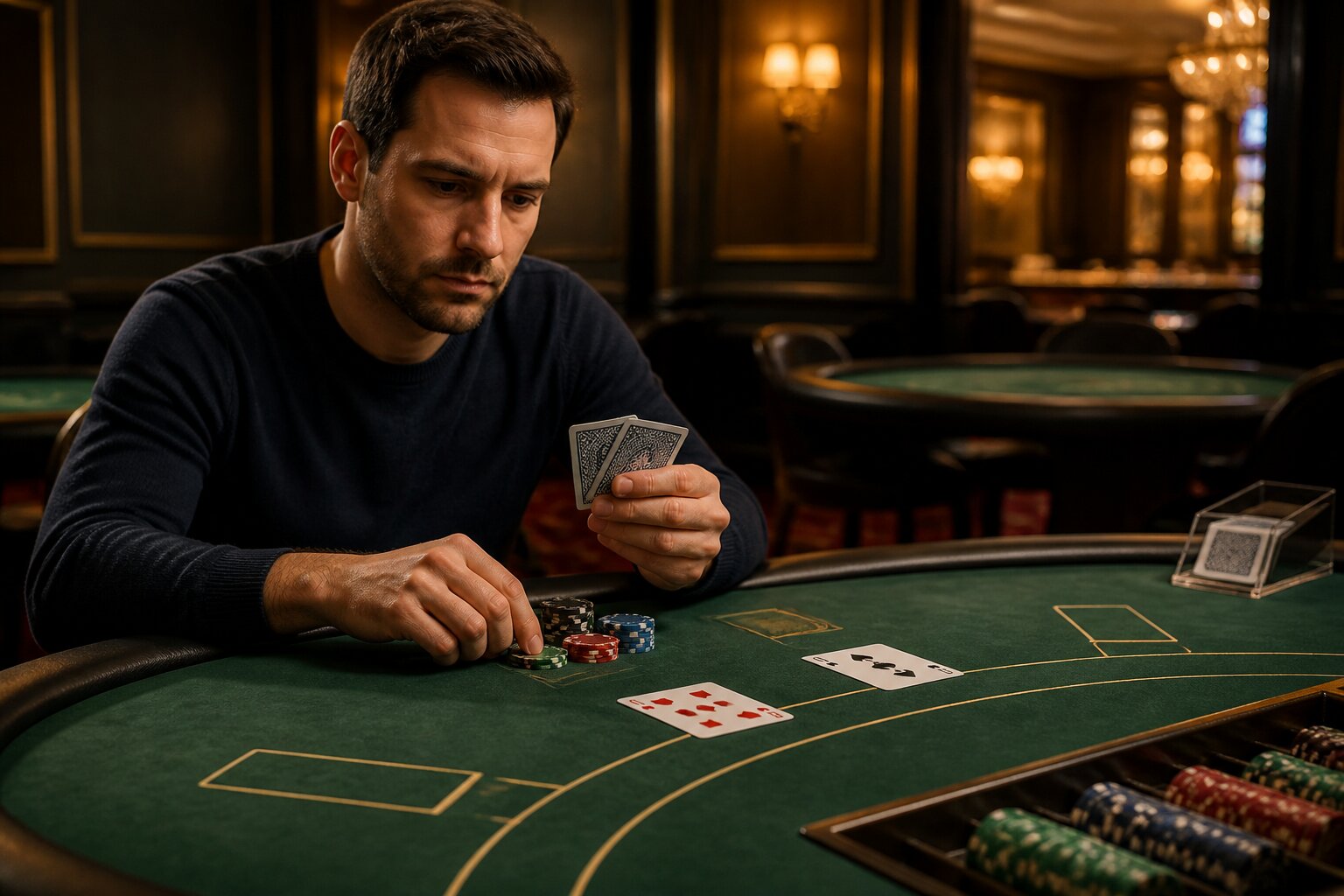
Solo blackjack means playing without any other players at the table — just you facing the dealer. Offline, that can be as informal as dealing cards at home and taking the roles of both player and dealer. Online, it usually means a digital game where you play one-on-one against a computerised dealer or a live dealer in a private seat.
The core rules stay the same: you try to make a hand that outperforms the dealer without exceeding 21. What changes is the pace and atmosphere. Without other players, you control the tempo and can concentrate on your own choices and learning points.
If you want to see how this works in practice, the next section covers the simple ways to play solo, whether online or with a physical deck.
Is It Possible To Play Blackjack Without Others?
Yes — solo blackjack is available both online and offline. At home, a single deck is all you need to practise dealing, hitting, standing and assessing outcomes. This is useful for learning how different hands play out and for trying variations of basic strategy in a low-pressure setting.
Online, many casinos offer single-player tables where you face a virtual or live dealer alone. These let you play at your own speed and often include options to review hands or adjust settings between rounds. If you play for real money, you must be 18 or over. Before you start, set a budget and sensible limits so your sessions stay within your comfort zone.
Benefits Of Playing Blackjack On Your Own
Playing solo brings practical advantages. It’s convenient — you can practise whenever suits you without waiting for other players. You can also explore different approaches without feeling self-conscious, and take the time to think through each decision.
For players focused on improvement, solo sessions highlight specific patterns in your play that might get overlooked at a busy table. You can experiment with variations of basic strategy and see how outcomes change, which helps when you later return to multiplayer tables.
Just remember to keep sessions proportionate to your goals. Treat solo play as practice and entertainment, not a way to earn money.
Solo Vs Traditional Blackjack: Key Differences
The main difference between solo and traditional blackjack is social context. Traditional tables are shared experiences where timing and player interaction affect pace and atmosphere. Betting patterns, table talk and the presence of several hands can influence how you play.
Solo blackjack removes those social factors. Decisions are entirely between you and the dealer, and you decide the tempo. Technically, the underlying game mechanics and house edge remain the same across both formats; what changes are the behavioural and situational elements that can influence decision-making.
If you enjoy concentrating on strategy or simply want a quieter session, solo play gives you that focus. If you prefer a social experience with other players around, a traditional table will suit you better.
Where Can You Play Blackjack Alone?
You can play solo blackjack in a few straightforward ways, each with different strengths depending on what you are after. Some options are best for learning, others for convenience, and some mimic the casino experience more closely.
Online Options For Solo Blackjack
Many regulated online casinos offer single-player digital blackjack tables where you play against an automated dealer. Some platforms also provide live dealer tables that allow one-player seats, giving a more authentic feel while remaining private.
These games mimic the rules of a casino table but let you play privately and often include features such as:
- hand histories that let you review previous rounds,
- adjustable speed so you can slow the game down or play faster,
- practice modes that allow play without risking real money.
Always choose trusted, regulated platforms to ensure fairness and protect your personal and financial information. If you use real-money options, make use of account controls such as deposit limits, loss limits and time reminders to keep play responsible. Remember that these tools are there to help you manage activity and reduce harm.
Playing Alone With A Physical Deck At Home
Using a deck at home is an accessible way to get hands-on practice. You can deal repeatedly, test reactions to different hands and rehearse counting or strategic choices without any pressure.
Home practice is particularly good for reinforcing how certain hands develop and for gaining confidence with basic strategy. Try using a strategy chart, practising with multiple decks if you plan to play that variation, or timing yourself to simulate casino pace.
Avoid wagering money at informal home sessions. Keep any practice focused on learning and enjoyment, and ensure that minors are not involved in or exposed to gambling activity. If you find play becoming more than a hobby, seek help and consider self-exclusion or other safer-gambling measures.
Common Myths About Playing Blackjack Solo
A few misconceptions circulate about solo blackjack, and it helps to be clear about what is and isn’t true. One myth is that playing alone alters the odds in your favour; the mathematical probabilities and house edge of a given game do not change because there are no other players. Another is that there is a secret method that guarantees wins when playing solo. No strategy can ensure consistent wins; outcomes stem from probabilistic rules and the choices you make within them.
Solo play isn’t risk-free either — any time real money is involved there’s a possibility of loss. That’s why practical safeguards, like limiting stakes and using account tools on regulated sites, are important to protect your session.
Is Solo Blackjack Right For You?
Solo blackjack suits players who value a quieter setting, want structured practice, or need to work on specific decision-making without the social elements of a full table. It’s particularly useful for newcomers learning the rules, and for more experienced players testing strategy adjustments in a controlled environment.
Consider how you prefer to play: if you like focus and control, solo sessions will feel productive. If you enjoy the social dynamic and spontaneity of other players, a traditional table will be more satisfying. Either way, choose settings and stakes that align with your goals and wellbeing, and use available safeguards to keep play balanced.
If you’re ready to try solo blackjack, start with free or low-stakes options so you can get comfortable with the flow before moving on. With a clear approach and sensible limits, solo play can be a useful, enjoyable way to learn and practise blackjack.
**The information provided in this blog is intended for educational purposes and should not be construed as betting advice or a guarantee of success. Always gamble responsibly.