
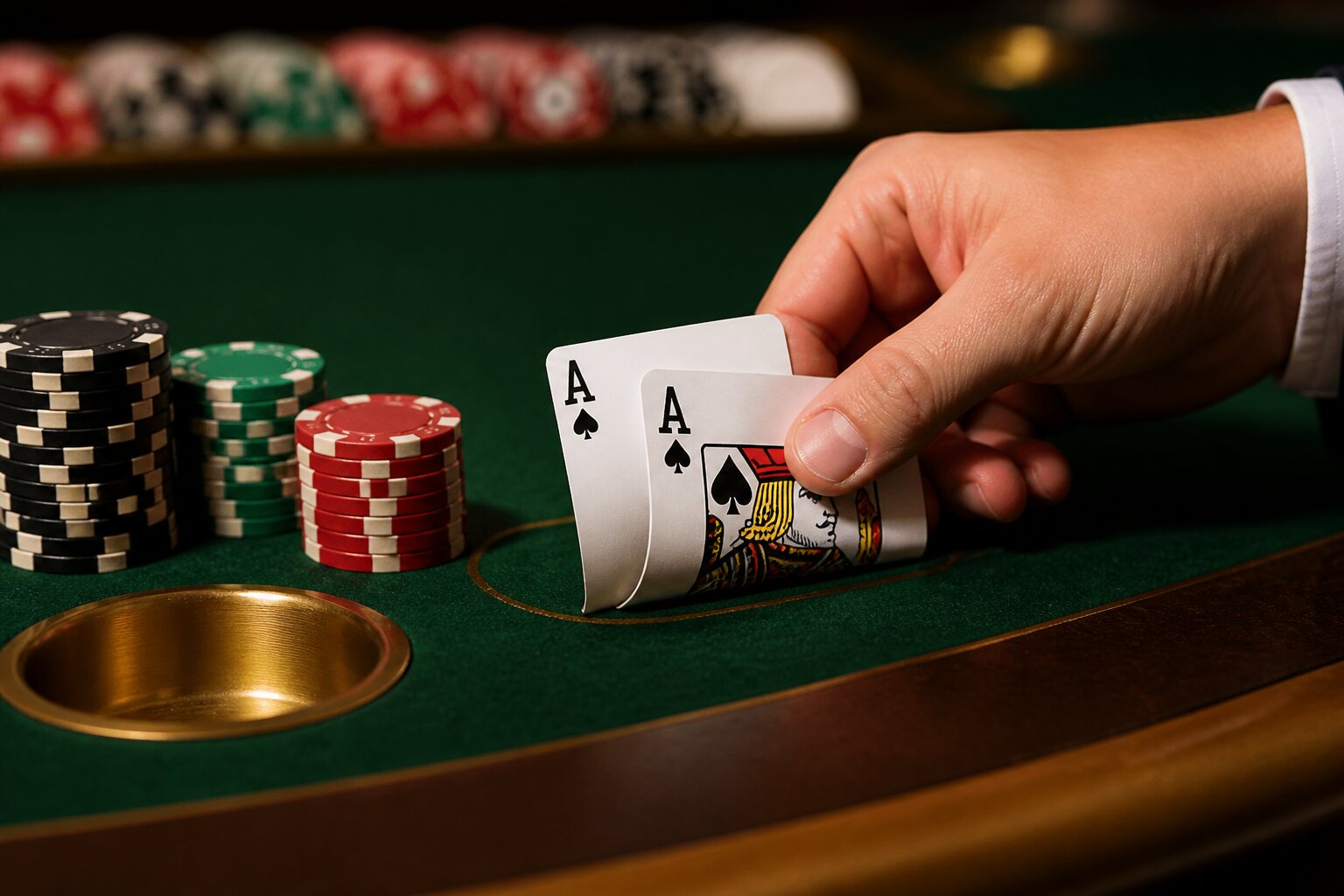
If you've spent time at the blackjack table, you might have heard players mention “power cards” — cards that can change how a hand develops. This article explains what people mean by that term, whether finishing a hand on such a card matters, and how the rules treat these situations.
We’ll keep things practical and clear so you know what to expect at the table and how to read the rules that apply to your game.
What Is a Power Card in Blackjack?
“Power card” is a player-made label rather than an official term. It usually refers to cards with high point values: tens, jacks, queens, kings, and sometimes aces. Tens and face cards are worth 10 points; aces can count as 1 or 11 depending on which gives a better total for the hand.
Players call these cards powerful because they can quickly move a hand toward 21. For example, a ten or face card paired with an ace creates a blackjack, which has a distinct payout and priority over ordinary winning hands. An ace drawn later in play may switch a hand from a vulnerable total to one that can stand against the dealer’s play, or turn a soft hand into a hard one.
Although the name suggests special status, the rules treat these cards the same as any other card in terms of play and settlement.
Are There Official Rules for Power Cards?
There are no official rules that single out “power cards.” Blackjack’s formal rules assign values to cards, and all decisions and outcomes follow from those values and any applicable table policies.
Where rules do vary is in the structure of the game: number of decks, whether doubling down or splitting is permitted, and the dealer’s obligations. Those differences affect strategy and expected outcomes, but none give a specific advantage or restriction to finishing a hand on a particular high-value card.
If you want clarity about any particular table, check the posted rules or ask the dealer before you play so you know how the house handles splits, doubles and payouts.
How Do House Rules Affect Power Card Finishes?
House rules shape how a round progresses, but they do not create special cases for final cards. For instance, a venue might use six decks rather than one, which changes the distribution of high cards over many hands, and it may require the dealer to hit on soft 17 or stand. Those conditions influence decisions you make during play, but finishing on a ten, face card, or ace is resolved exactly as any other final card would be.
Where house rules matter is in settlement and permitted actions. Some tables pay standard blackjacks at a particular rate, others have restrictions on re-splitting aces, and some limit when you can double down. Understanding these specifics helps you interpret outcomes when a power card affects your total near the end of a hand.
If anything about a rule is unclear, asking for clarification before staking money is the sensible course.
Common Myths About Power Cards in Blackjack
Several misconceptions circulate about these high-value cards. One is the idea that drawing many high cards in earlier rounds changes the immediate odds for the next deal in a simple, predictable way. While card composition does shift with the cards already dealt, single hands are resolved under the same rules and randomness, and any strategic adjustment is part of card composition techniques rather than a guarantee of a particular result.
Another myth is that following a fixed betting pattern or sequence of plays makes it more likely to finish on a certain card. Blackjack strategy addresses how to play hands given totals and dealer up-cards, but it does not alter which specific card will appear on any single draw.
Finally, there is sometimes confusion around card counting. That is a distinct, technical practice that relies on tracking the ratio of high to low cards remaining in the shoe. Many venues have measures to detect or discourage systematic tracking, and whether it is permitted depends on the operator’s policies.
Understanding the facts behind these ideas helps separate useful strategic thinking from unsupported claims.
What Happens If You Try to Finish on a Power Card?
There is no special procedure if your final card happens to be one of the high-value cards. Player choices are the same: hitting, standing, doubling, or splitting when allowed, and the outcome is settled by comparing final totals to the dealer’s hand and applying the table’s payout rules.
If a player stands after receiving a high card, play continues with the dealer completing their hand according to house obligations. If splitting, doubling or insurance are in play, those options are resolved by the same rules irrespective of the specific cards involved. In short, a power card does not trigger a unique rule or bonus just because it concludes the hand.
When in doubt about how a table resolves a particular situation, a brief question to the dealer will clarify how the rules are applied in that venue.
Verdict: Can You Legally Finish on a Power Card?
There is nothing in standard blackjack rules that prevents a player from finishing on a high-value card. The game treats all cards according to their point value and applies the same settlement procedures regardless of which card concludes a hand.
What matters most is familiarising yourself with the table rules that affect play and payouts, and making decisions that fit your strategy and bankroll. Keep play informed and accountable by checking the specific terms at the table and asking questions when the rules are unclear.
If you want to continue exploring strategy or table variations, browse our site for guides and comparisons that explain how different rulesets change play and expected results.
**The information provided in this blog is intended for educational purposes and should not be construed as betting advice or a guarantee of success. Always gamble responsibly.